
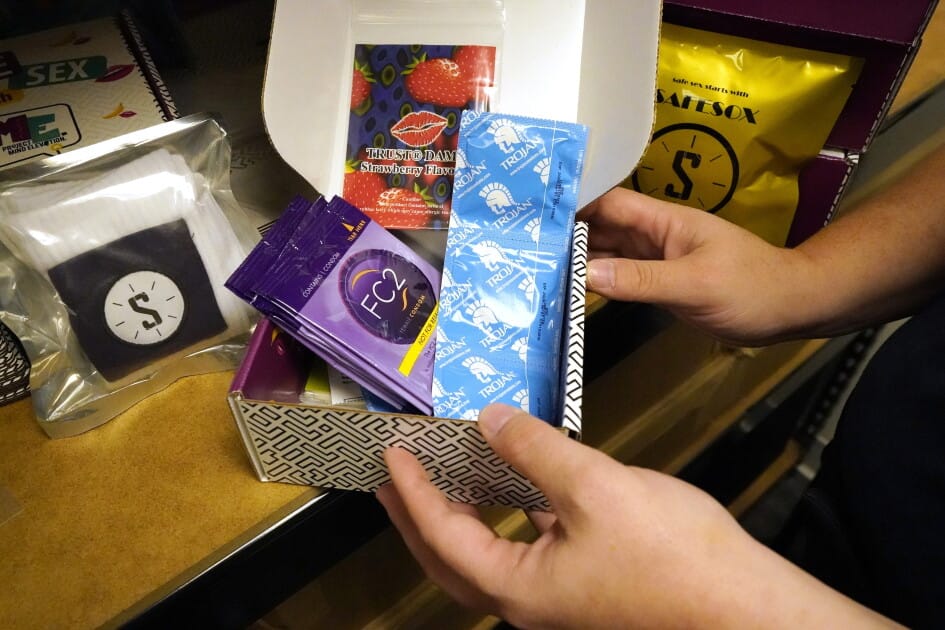
The Children’s Aid’s teen pregnancy prevention program was more than just about talking to young people about the risks associated with teen pregnancy.
The New York City nonprofit provides comprehensive services for K-12 students living in poverty in schools, at after-school programs, and in other community-based and foster-care settings. Its teen pregnancy prevention program provided young people with connections to trusted adults and referrals to health resources.
It also helped them build healthy relationships and strengthen their communication and decision-making skills by hiring some for paid positions as peer educators, said Rhonda Braxton, the organization’s vice president of health and wellness. Some even went on to pursue careers in medicine or social work.
All these efforts were fully funded by a federal Teen Pregnancy Prevention Program grant—until June 26, when the organization received a letter from the Department of Health and Human Services terminating its grant two years early, alleging it clashed with Trump administration priorities.
“We were able to build trust, build relationships, help [young people] see that having a relationship with adults, being able to ask questions, having healthy relationships with each other, [having] positive body image—all of those are part of being a healthy adult,” Braxton said. “Our ability to spread that message has really been curtailed.”
Children’s Aid is one of dozens of organizations nationwide experiencing similar turmoil. On June 26, HHS abruptly canceled the remaining two years of funding—$143 million in total—for more than 50 separate Teen Pregnancy Prevention Program grants across 25 states.
Most affected projects—including several that worked directly with school districts—were expecting $1 million to $4 million more before winding down in 2028. Canceled grants include five each in Texas and California, and three each in Montana, North Carolina, and New York.
A coalition of affected grantees from Minnesota and Washington state on July 14 filed a federal lawsuit challenging the legality of the cuts.
Grantees who spoke with Education Week raised concerns about the long-term consequences of losing this funding, especially as teen pregnancy rates have hit historic lows in recent years.
The cuts could, they said, lead to an increase in teen pregnancy and sexually transmitted infections in young people, which contribute to chronic absenteeism and other negative educational outcomes.
“These are vital supports in New York City schools that we’re providing,” said Phoebe Boyer, the Children’s Aid president and CEO. “Other organizations who also lost their funding are providing vital support that, frankly, now will no longer exist. We are working very hard to figure out how to do pieces of it, but it’s very hard to do.”
Meanwhile, HHS is currently accepting applications for new Teen Pregnancy Prevention Program awards with new requirements that align with conservative priorities like emphasizing abstinence.
The situation represents the latest of several Trump administration efforts to revamp the grant program, including during the president’s first term, when HHS political appointees overruled objections from career staff and terminated more than 80 teen pregnancy prevention awards. Affected organizations later secured a ruling from a federal judge deeming the terminations illegal.
Grantees this time received virtually identical letters saying their program “normalizes or promotes sexual activity for minors.” Roughly 15 ongoing teen pregnancy prevention grants remain intact.
A spokesperson for HHS didn’t respond to questions about why the agency canceled the grants, how it decided which grants to cut, or whether organizations that lost funding will be eligible to receive future rounds of funding through the program.
Grantees were partnering with schools on teen pregnancy prevention efforts
Since January 2025, at least 14 federal agencies under the second Trump administration have canceled hundreds of grants totaling billions of dollars for K-12 schools and education programs.
Children’s Aid had been a recipient of the health and human services agency’s Teen Pregnancy Prevention Program grant since 2015. In 2023, the organization received a grant renewal for $936,700 a year through 2028.
With this federal funding, Children’s Aid supported 1,200 young people per year. Under the grant terms, it agreed to provide medically accurate, evidence-based health education, which included topics such as building healthy relationships, communication, and decisionmaking skills.
Children’s Aid partners with 19 New York City schools and six school-based health clinics to address underlying drivers of chronic absenteeism, as well as students’ overall health and well-being.
Children’s Aid educators visited classrooms, hosted workshops on sexual and reproductive health, and trained school educators on the organization’s sexual and reproductive health education curriculum. Children’s Aid also operates a few school-based health centers, which is another way for the organization to provide sexual and reproductive health resources to young people.
Peer educators played a critical role, Braxton said. Without the grant, these high school students are not just losing employment, but also opportunities to develop leadership and communication skills and deeper connections with adults, Boyer said.
“These are young people who attend these schools, live in the neighborhoods that our students live in, may speak the same native languages as the young people they are teaching,” she said.
Nine Children’s Aid staff members might also lose their jobs, Braxton said.
The organization also used the grant to train 100 parents and caregivers and youth-serving professionals on its health education curriculum and how to have conversations about sexual and reproductive health with young people.
The organization’s partnership with schools allowed the group to provide “specialized expertise while allowing educators to focus on their broader education and instructional responsibilities,” Braxton said. “We were trusted partners with school administration, with the teachers, and also trusted adults in the lives of the young people who attended the schools.”
In Wisconsin, the termination of the grant for the state’s department of health services affects its 13 partners that carried out the teen pregnancy prevention work around the state, the agency said in a statement to Education Week.
The goal was to prevent unintended youth pregnancy and sexually transmitted infections among adolescents, and increase the percentage of youth who feel connected to their communities and have access to youth-friendly services and resources, according to the department.
“Without this grant funding, these activities will stop,” the department said. “We are currently exploring other funding opportunities similar to this grant, and we are assessing all avenues possible to ensure the federal government is following all requirements in this funding agreement.”
Recent federal cuts follow a familiar pattern
Congress established the Teen Pregnancy Prevention Program in 2010, during the Obama administration. Lawmakers initially authorized the program for five years, then renewed it in 2015.
Things changed when President Donald Trump took office the first time. Valerie Huber, fresh from running an organization that promoted abstinence, joined HHS in June 2017 as chief of staff to the assistant health secretary.
Weeks later, according to internal emails obtained by NBC News, Huber and her deputies began targeting the Teen Pregnancy Prevention Program grants; more than 80 recipients received early cancellation notices in July 2017.
Later that year, HHS announced a $10 million investment in “any sex education programs that follow the science to improve youth health and well-being,” including “sexual risk avoidance.” In 2018, HHS followed up with guidance requiring all federally funded teen pregnancy prevention programs to discourage teens from having sex altogether.
A similar sequence of events appears to be playing out now. The cancellation letters from HHS last month told grantees their projects “no longer effectuate the administration’s priorities.”
Just three weeks after the letters went out, a federal judge ruled in a case over separate grants that it’s illegal for the federal government to use that language to justify canceling previously awarded funds.
Some letters accused programs of infractions like sharing “advice on making condom use more pleasurable.” Program directors have said those accusations are false.
New competition is shifting the program’s focus
The second Trump administration is now seeking applications for new iterations of the Teen Pregnancy Prevention Program that look very different from what the current grantees were doing.
Prospective grantees must pass an “alignment review” ensuring that their proposal doesn’t include diversity, equity, and inclusion efforts or support gender-affirming care. Programs that stress marriage before procreation will receive priority consideration, as will applicants that haven’t received federal funds before.
Sexual and reproductive health education experts raised concerns about the new iteration of the Teen Pregnancy Prevention Program.
“When they put out this new notice of funding opportunities with these requirements around abstinence only, that doesn’t necessarily square with what evidence there is,” said Rachel Fey, the interim co-CEO and vice president of policy and strategic partnerships for Power to Decide, a nonprofit advocacy and research organization focused on sexual and reproductive health.
“This is a program where the whole point is evidence-based programs that are proven to change behavior amongst young people,” Fey said. “I don’t think talking about preserving your fertility is going to change behavior for a 16-year-old, except maybe to discourage them or scare them away from using things like contraception.”
It’s also unclear from the new notice which evidence-based curricula are acceptable; the administration has taken down the prior list of evidence-based programs, Fey said.
Several legal battles have already been playing out in the last year over other HHS programs where the Trump administration has imposed similar new conditions.
Seeking another grant comes with risks
Children’s Aid had been running its Teen Pregnancy Prevention Program since 2015 with positive feedback from its HHS grant manager, according to Boyer and Braxton. The sudden cancellation came as a shock.
“There was no runway,” Braxton said.
There was no time to figure out other funding sources. Partner schools had already planned for Children’s Aid to continue programming over the summer and next school year. Peer educators and organization staff thought they would have jobs.
“This really did create quite an upheaval for the program,” she said.
Children’s Aid is seeking new funding to continue its work.
“We recognize its importance, especially in light of the teen pregnancy rate in these very high-risk neighborhoods, but $1 million is a hard number to backfill,” especially when eliminated overnight, Braxton said.
The organization, however, won’t apply for the replacement federal grant, Braxton said.
“We are seeking evidence-based, medically accurate curriculum and interventions in order to utilize our program areas,” she said.
2026-07-29 20:05:28
Source link