
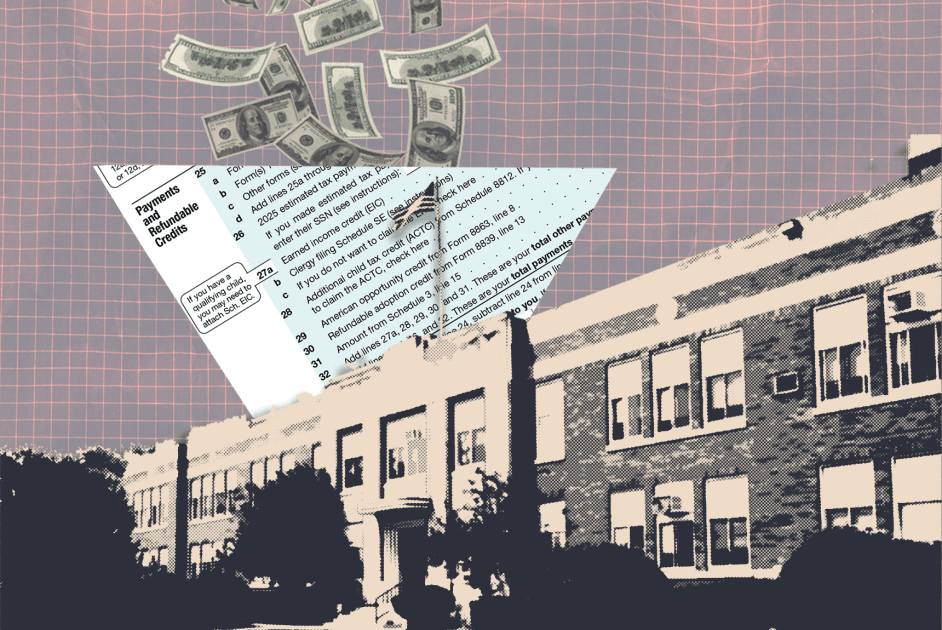
Beginning in January, a new federal scholarship tax credit is projected to generate billions of dollars to expand educational opportunities for students across the country. Roughly 9 out of 10 American students—including the overwhelming majority of those attending public schools—will be eligible to benefit from those dollars.
Last summer, when one of us (Deborah Gist) first heard about the new law, her reaction was similar to that of many public school leaders. It looked like another private school voucher initiative that offered little to the public school students she had spent her career serving. But when she read the statute itself, what she found surprised her. Public school students could be among the primary beneficiaries of this program. The scholarships could fund many of the opportunities she had struggled to sustain as a superintendent—programs like high-impact tutoring, summer learning, career-connected learning, and other out-of-regular-school-day experiences that help students thrive.
We understand why many educators are skeptical of this tax-credit program. There are legitimate debates about how this law will work and the net impact it will have. Critics worry that most scholarship dollars will subsidize private school tuition and that the program will be preyed on by fraudulent actors. And students in the poorest communities may see little benefit if the taxpayers in those communities owe too little in federal taxes to claim the credit since donors often look for their giving to make a difference close to home. But now that the law exists, public educators should consider the opportunities it puts on the table for their students.
A voucher’s logic is exit: A family gets one only by choosing not to attend a public school. With this law, in contrast, students do not have to leave public schools to benefit. Any student eligible to attend public school whose family earns no more than 300% of the area median income can receive a scholarship. That threshold covers the vast majority of American students, most of whom attend district and charter schools.
Here’s how the program works. Beginning in 2027, taxpayers can donate up to $1,700 to state-certified nonprofit scholarship-granting organizations and then receive the full amount back as a federal tax credit—not a deduction but a dollar-for-dollar credit. Donors can give from any state, but each nonprofit can award scholarships only to eligible students in the state where it operates, so students benefit only if their state opts in. So far, 30 states have opted in, most led by Republican governors, though Colorado Gov. Jared Polis has signed on and New York Gov. Kathy Hochul has signaled she plans to. Many Democratic governors say they’re waiting to see how the Treasury Department’s final regulations, expected soon, are written. Even before then, the statute and the department’s preliminary guidance point toward scholarships covering a broad range of expenses, including high-impact academic tutoring and extended-day programs.
For public educators, the real promise of this law lies not in its legal language but in the opportunities it will make available for students enrolled in public schools.
Whether this law pulls resources and attention away from public education or becomes a new source of opportunity for public school students will depend on what happens next.”
Imagine a middle school determined to ensure every student is ready for Algebra I but lacking the resources to provide the intensive math acceleration some students need to get there. Or a high school where students with learning disabilities need specialized therapies and academic support to succeed—help that the budget can’t cover. Or an elementary school that dreams of offering an extended-day STEM program where students explore robotics and artificial intelligence but where the cost of programming, materials, and transportation has kept those opportunities out of reach. Public schools know which students would benefit most from opportunities like these. The challenge is finding sustainable ways to provide them.
Public schools are responsible for offering every student a free public education, but the opportunity gap in America is not only about what happens during the school day. At the beginning of the decade, families spent roughly $129 billion each year on tutoring, after-school programs, summer learning, enrichment, technology, and other educational opportunities beyond the classroom. Too many public school students from lower-income families miss out on these kinds of formative experiences that higher-income families regularly provide. This law has the potential to help narrow those opportunity gaps for students who remain in their public schools.
What we are pointing out isn’t an argument about whether this law is the ideal way to fund K-12 education. Reasonable people will continue to disagree about that, and they should. Yet, given that the law exists, educators and parents of public school students should take a second look at what it makes possible. Deborah did, and what she found persuaded her to build an organization to help public schools put these dollars to work for their students. Whether this law pulls resources and attention away from public education or becomes a new source of opportunity for public school students will depend on what happens next: whether states decide to participate, whether scholarship-granting organizations that focus on public school students emerge, and whether districts choose to partner with them.
Public school leaders have always found creative ways to expand opportunities for students despite limited resources—such as partnering with community organizations to make childcare, healthcare, and family services available through their schools or getting grants and running fundraisers to cover the costs of maker spaces, band instruments, and field trips. The Federal Scholarship Tax Credit offers another tool to do exactly that.
Leaders won’t have to figure out this new landscape alone. Several scholarship-granting nonprofit organizations have emerged to collect credit-eligible donations and award scholarships to students in public schools. For example, EducationSuperHighway will fund one-on-one literacy tutoring for 1st graders reading below grade level. Deborah’s organization, Future School Fund, partners with school districts, charter networks, and organizations serving public school students to handle the administrative and compliance work of the tax credit for them. And AASA, the School Superintendents Association, offers webinars and guidance that walk districts through whether and how to participate.
Before deciding how to respond to this new program, public school leaders should first understand what it makes possible for the students they serve. Then, they may want to ask: Can we afford to let billions of dollars in new educational opportunities pass our students by?
2026-09-29 19:57:33
Source link