
Average reading and math scores for 9-year-old students rose from 2022 to 2025, according to the newest results from the National Assessment of Educational Progress.
Olivier Touron/AFP via Getty Images
hide caption
toggle caption
Olivier Touron/AFP via Getty Images
New federal test scores show younger students are making gains in reading and math — after years of declines.
“I think this is an optimistic release,” Matthew Soldner, acting commissioner of the National Center for Education Statistics, told NPR.
Results from the long-term trend (LTT) report, released Wednesday, provide a national look at progress in reading and math for 9- and 13-year-old students. The tests, which students take on pencil and paper every few years, have asked many of the same questions since they were first given in the 1970s. The tests are part of the National Assessment for Educational Progress (NAEP) and are nationally representative of student learning. More than 30,000 students took the exams between October 2024 and March 2025.
Here are five takeaways from the results:
1. Nine-year-olds made some solid gains.
The younger students tested showed gains in both reading and math, “which is fantastic,” said Soldner. What’s notable is that students across the board improved their scores, including lower-performing kids.
“It is just so encouraging,” he said. “Even though they’re performing below average, [they] are trending upward.”
One possible reason for the overall improvement, the report points out, is the students’ age. They were 4 when the pandemic started in 2020 and didn’t begin school until after most places had returned to full-time, in-person instruction. That means they didn’t miss key lessons in literacy and math in the early years of elementary school.
These students gave researchers hope about the potential that the nation can build back some of the slide that began long before COVID-19.
2. But 13-year-olds are hurting.
The report paints a less optimistic picture about 13-year-olds. Compared to the last assessment, students showed no significant improvement in reading or math.
Scores in reading remain below where they were at the start of the pandemic on average, and that includes Hispanic students, white students, female students, students who are economically disadvantaged and suburban students.
Reading scores from this test, on average, are not significantly different from performance in the first-ever administered test in 1971.
“The lack of progress in 13-year-olds raises huge questions and ought to serve as a catalyst for change,” Lesley Muldoon, the executive director of the National Assessment Governing Board, said during a press briefing. Her organization sets policy related to NAEP.
For these 13-year-old students, unlike their 9-year-old counterparts, the pandemic was the backdrop for much of their elementary school experience. In 2020, they were in second or third grade. Those critical years for literacy and math skills were disrupted by school closures, and this stagnant performance may be one consequence.
3. Fewer students are reading for pleasure — than ever.
At the same time, the report found that reading is a pastime for a shrinking number of kids.
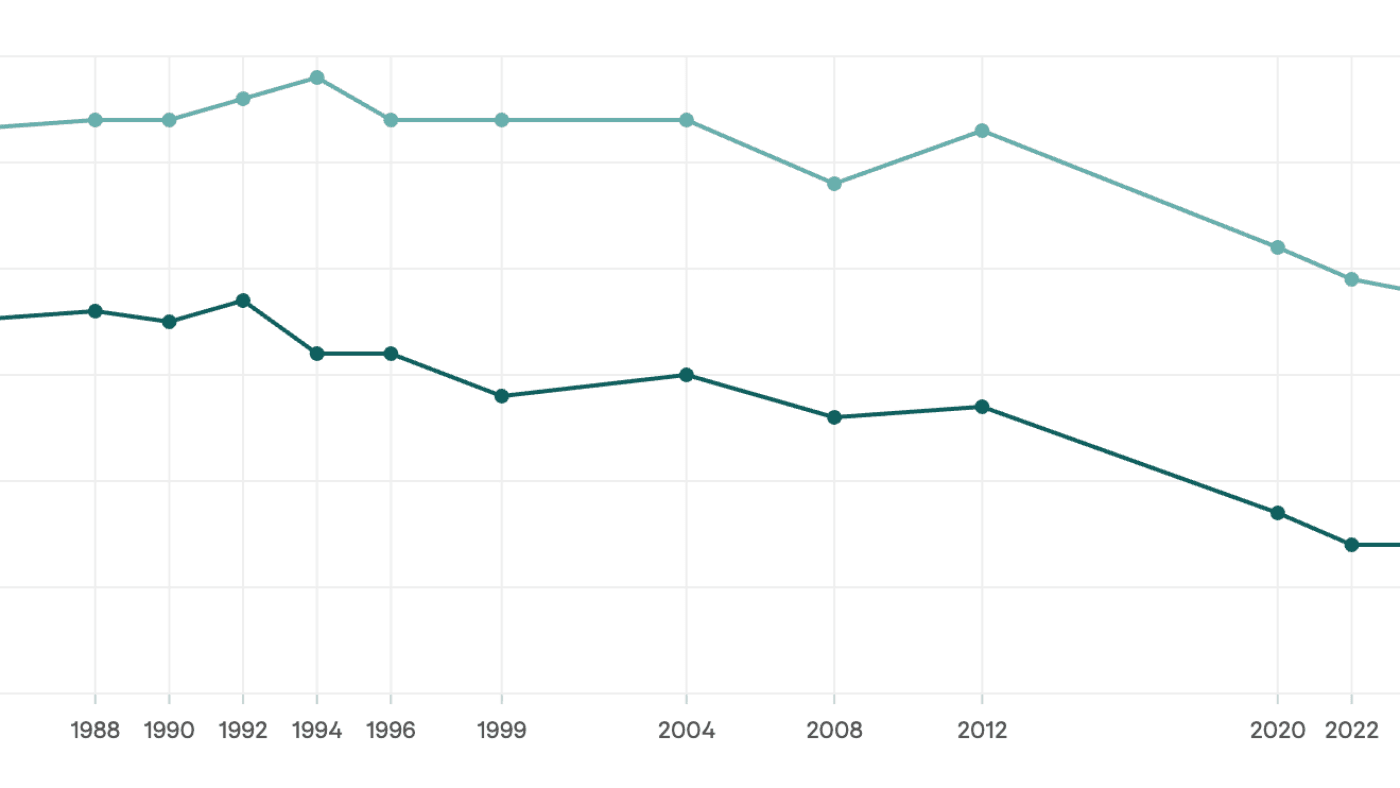
In 1984, 35% of 13-year-old students reported reading for fun on a daily basis. In 2022 and 2025, only 14% said the same. A far greater share of 9-year-olds — 37% — indicated they read for fun every day, but that’s sharply down from decades earlier.
4. Math progress erased for 13-year-olds.
From 1978 to 2012, the average math scores on the LTT for 13-year-olds improved by 21 points. The climbing scores were a bright spot in more than 50 years of data. This report shows that most of those gains have been erased.
The lowest-performing students now show no gains at all compared with the 1978 math test results.
“As a nation, we have to bring more focus to the middle school years,” Muldoon told reporters. “It’ll take a lot of collective work, but we’ve seen progress before, and it’s possible to see it again.”
5. This is the last we’ll see of the long-term trend report for a while.
This is the first NAEP long-term trend report released since the Trump administration began making cuts to the U.S. Education Department in 2025. Those cuts included laying off more than half the workers at the Institute of Education Sciences, the arm of the department charged with measuring student achievement and overseeing and processing the data that comes from the tests students take.
After those cuts, the assessment’s governing board also canceled about a dozen national and state assessments of student progress through 2032 — one of those being the next iteration of the long term trend report. Since then, plans have been announced to restore some of those exams and the congressionally mandated Nation’s Report Card remains on schedule for early 2027.
Still, students won’t put pen to paper for this exam again until 2033.
Edited by: Nirvi Shah
Visual design and development by: LA Johnson
Sequoia Carrillo 2026-06-10 04:01:00
Source link