
In 1982, the Plyler v. Doe decision by the U.S. Supreme Court established that undocumented students have a constitutional right to a free public education in a 5-4 decision.
Since then, state-level efforts to challenge the landmark decision have surfaced, most notably in California in 1994 and Alabama in 2011. Both ultimately failed to overturn or meaningfully weaken the ruling.
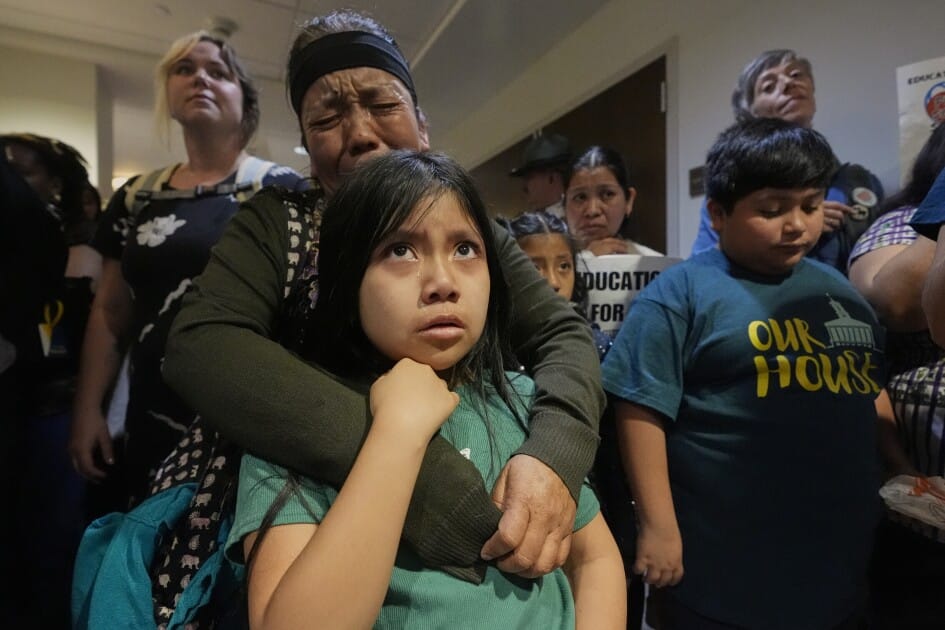
More recently, Tennessee lawmakers are expected to vote on legislation that would require schools to collect students’ immigration status information. Public schools nationwide do not currently collect such information, in part because it could deter undocumented students from enrolling in schools and raise constitutional concerns under Plyler, which remains binding federal law.
Tennessee is one of three states that have proposed action challenging the Plyler decision since President Donald Trump’s 2024 reelection, while similar efforts in four other states have failed, according to an Education Week analysis.
The Heritage Foundation, the conservative think tank behind the Project 2025 policy playbook shaping much of Trump’s agenda, published a document in February calling on more state challenges to trigger lawsuits with the ultimate goal of getting the nation’s highest court to overturn the landmark 1982 decision.
Lora Ries, the director of the Heritage Foundation’s Border Security and Immigration Center and author of the policy document, spoke with Education Week about why she and others say it’s time for the Supreme Court to revisit the Plyler decision now.
This interview has been edited for length and clarity.
What is unique about the current political and legal landscape that would allow for states to successfully challenge Plyler?
[It’s President Joe] Biden’s four years, and historic levels of numbers of [undocumented immigrants] that came into the country in those four years that greatly burdened the states and led to many people voting in 2024 to bring an end to it. Not just by securing the border, but for the first time, you heard people supporting mass deportations, in part because of the costs they were facing at the state and local level, whether that was housing, public education, health care, etc.
Because of Plyler … [schools] don’t ask for immigration status. If you have the data, we can better estimate [the] costs of subpopulations. For example, unaccompanied alien children. This is something where the [U.S.] Department of Health and Human Services has responsibility for finding sponsors and shelter, and HHS reports how many unaccompanied children they sent to various states. You can take that number, multiply it by what a state pays per pupil for public education, and come up with costs.
Americans woke up to what they were facing. I think that’s why we saw six states last year try to pass legislation or a rule to revisit this issue.
What’s the timeline you foresee for the Supreme Court to overturn Plyler?
A state would have to successfully pass, and then the governor sign into law, such legislation. Then, of course, someone would sue, and it would wind its way up to the courts. Would the Supreme Court grant certiorari? That’s an unknown, but assuming they did, we’re talking a few years here.
What would happen if Plyler gets overturned, undocumented families are charged tuition, and they cannot pay?
Parents have options. They can pursue a third party, an NGO, a faith-based organization, [or] religious education, to basically pay on the child’s behalf. They could move to a different district that doesn’t charge tuition, they could move to a different state that doesn’t charge tuition, or they could move out of the country.
Some states have enshrined Plyler into state law. If the Supreme Court overturns Plyler could only some states charge tuition for undocumented families?
Yes.
What is the rationale for schools to ask about students’ immigration status, and what would they do with that information?
Taxpayers should know how much they’re spending on education, on detention, or [on] any issue. And the fact that this data isn’t collected is, frankly, irresponsible. [States are] coming up with budgets blindly because they’re not collecting this data.
This could be in aggregate. It’s this many people who couldn’t provide documentation, and [as for] resources we spent this much in the school district on English as a second language, for example, or we needed these many additional teacher assistants, etc. But transparency is a good thing. Knowing what costs are completely is [a] good thing, and that way you can make better policy.
Is there any risk related to the privacy of the collected students’ immigration information?
It’s aggregate numbers. It’s not personally identifying information.
Beyond model legislation for states to challenge Plyler, are there other ways the Heritage Foundation is supporting state leaders seeking to take such action?
Heritage publishes model legislation, and Heritage Action for America will receive bills from some states asking for technical advice on those bills. And so we will provide that if Heritage Action is registered to lobby in that state.
2026-03-26 20:49:00
Source link