
When I first heard Bruce Springsteen’s song “Streets of Minneapolis” on the radio in late January, I had to pull over. He sings about winter on Nicollet Avenue. About a city fighting back against federal occupation. About residents standing against smoke and rubber bullets in the dawn’s early light, their voices ringing through the night.
And then he names them. Alex Pretti. Renee Good. Two people left to die on snow-filled streets where mercy should have stood.
The chorus comes. Springsteen’s voice rises, singing about taking a stand for this land. And then that phrase—the one that lands like a blow: “the stranger in our midst.”
I grew up blocks from Nicollet Avenue. Los Angeles is home now, but my sister still lives there. She was in the cold, chanting with strangers, demanding that federal forces leave her city. She’s a teacher. Her children are half Black. She worries about their safety every single day. Federal forces came to her city. Occupied her streets. Killed her neighbors.
Federal power, deployed.
Recently, that deployment subsided. The administration announced the surge was coming to an end, though a small force would remain.
The people spoke. The power responded. But there’s a lesson in what made them withdraw: visibility, pressure, voices that wouldn’t be silenced. Excessive federal power ended because people demanded it end.
During that time when federal forces occupied her city, my sister—a teacher—was on the phone with me, moving between grief and fury. She kept coming back to the same questions: Where is federal power when schools need it? Where is the oversight that’s supposed to protect the students in her classroom? Where is the enforcement that gives education law teeth?
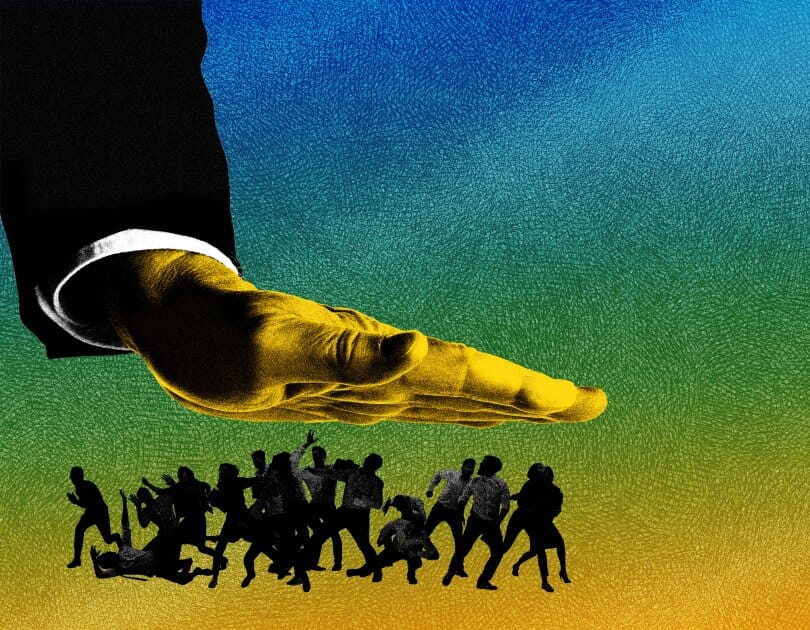
The irony isn’t lost on her. In December 2025, Operation Metro Surge began in Minnesota, which the U.S. Department of Homeland Security called “the largest DHS operation ever.” Beginning in March 2025, the U.S. Department of Education downsized the office for civil rights as part of reduction in force actions, slowing work and creating a backlog of complaints. Federal agents occupied the Twin Cities with guns; federal supervision of civil rights in schools across the country diminished. Both reflect the same imbalance: federal authority asserted where it can control citizens, withdrawn where it would protect citizens.
For 20 years, I’ve worked in special education as a teacher, coordinator, and special education local plan area director overseeing special education services across a California school district. I’ve sat in conference rooms with families who are of color, who speak languages schools don’t prioritize, and who the system sees as strangers in our midst. These families fight for services promised in individualized education programs, the legally binding plans that outline what schools are required to provide children. They document concerns. They file complaints. They refuse to accept less than what the law guarantees their children.
And for years, there was a backstop. When local accountability failed, the federal government stepped in. The U.S. Department of Justice would investigate systemic violations—including settlements with districts that were found to have denied services to students with disabilities and retaliated against staff who advocated for the students—and enforce compliance. Federal law meant something because federal agencies had the power to ensure promises were kept.
Though the current administration’s attempt to dismantle oversight of equal access to education was eventually rescinded, the damage was done. Between March and September of last year, the skeleton crew left at the U.S. Department of Education’s office for civil rights resolved 90% of complaints of alleged discrimination by dismissing them outright, according to the Government Accountability Office. By the time the administration reversed course, dozens of experienced staff who were laid off had already moved on. The institutional knowledge they carried—the relationships, the case history, the expertise—does not return with a reinstatement order.
The fact that this happened still weighs on me. The families I work with are asking for what the law already promises. But laws without enforcement are just words on paper. Federal civil rights protections were created precisely because local systems failed vulnerable populations. But that oversight is at risk because protection of the vulnerable requires enforcement, funding, and accountability that institutions may be unwilling or unable to sustain.
If the OCR layoffs hadn’t been rescinded, what would have happened to children with disabilities? Even now, what about all those families who have to wait to have their cases reviewed because of the backlog of complaints? What about the families whose cases were dismissed?
I don’t have answers. But I know educators should be asking these questions. Urgently.
We’re in a dark place when we have to choose between federal overreach and federal abandonment. When families in Minneapolis face too much federal power and families in special education face too little. When federal authority shows up to control but wants to disappear when it’s needed for protection.
The United States just watched extreme federal power diminish because people demanded it, because federal judges and courts stepped in. We saw what happens when communities organize, when voices refuse to be silent.
Now, educators need that same energy. We should be questioning when federal power protects us and when it harms us. Why is it overwhelmingly present for occupation but not for accountability?
Educators must speak up to ensure federal accountability doesn’t dwindle, to ensure promises aren’t just words. Before we lose something we can’t get back. Before more students fall through the cracks. Before the stranger in our midst becomes every student who needed protection and didn’t get it.
The stakes couldn’t be higher.
2026-03-04 21:20:09
Source link