
For years, social media companies have disputed allegations that they harm children’s mental health through deliberate design choices that addict kids to their platforms and fail to protect them from sexual predators and dangerous content. Now, these tech giants are getting a chance to make their case in courtrooms around the country, including before a jury for the first time.
Some of the biggest players from Meta to TikTok are facing federal and state trials that seek to hold them responsible for harming children’s mental health. The lawsuits have come from school districts, local and state governments, and the federal government, as well as thousands of families.
Two trials are now underway in Los Angeles and in New Mexico, with more to come. The courtroom showdowns are the culmination of years of scrutiny of the platforms over child safety, along with whether deliberate design choices make them addictive and serve up content that leads to depression, eating disorders, or suicide.
Experts see the reckoning as reminiscent of cases against tobacco and opioid markets, and the plaintiffs hope that social media platforms will see similar outcomes as cigarette makers and drug companies, pharmacies, and distributors.
The outcomes could challenge the companies’ First Amendment shield and Section 230 of the 1996 Communications Decency Act, which protects tech companies from liability for material posted on their platforms. They could also be costly in the form of legal fees and settlements. And they could force the companies to change how they operate, potentially losing users and advertising dollars.
Here’s a look at the major social media-harms cases in the United States.
The Los Angeles case centers on addiction
Jurors in a landmark social media case that seeks to hold tech companies responsible for harms to children got their first glimpse into what will be a lengthy trial characterized by dueling narratives from the plaintiffs and the two remaining defendants, Meta and YouTube.
At the core of the Los Angeles case is a 20-year-old identified only by the initials “KGM,” whose case could determine how thousands of similar lawsuits will play out. KGM and the cases of two other plaintiffs have been selected to be bellwether trials—essentially test cases for both sides to see how their arguments play out before a jury.
“This is a monumental inflection point in social media,” said Matthew Bergman of the Seattle-based Social Media Victims Law Center, which represents more than 1,000 plaintiffs in lawsuits against social media companies. “When we started doing this four years ago, no one said we’d ever get to trial. And here we are trying our case in front of a fair and impartial jury.”
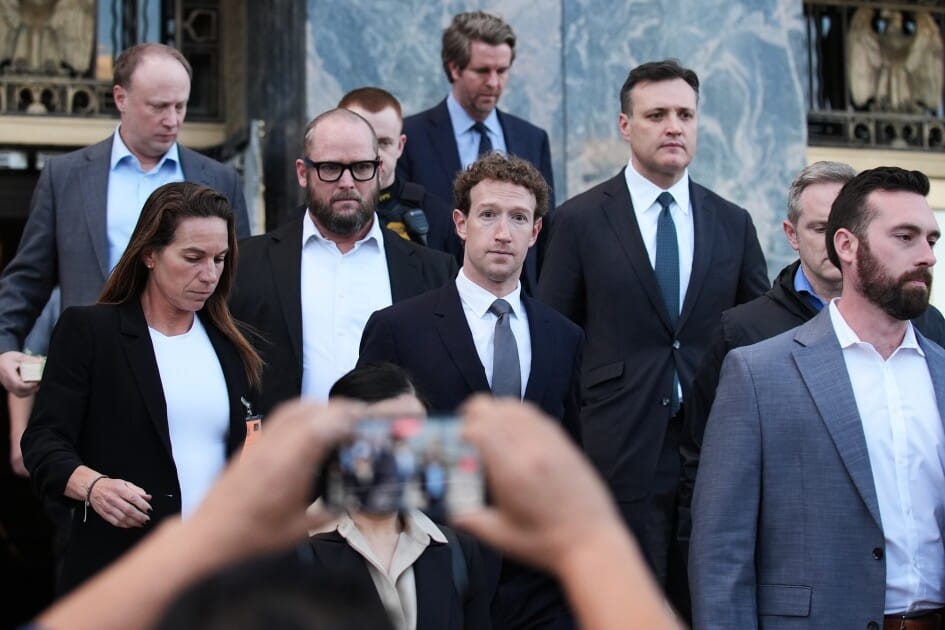
On Wednesday, Meta CEO Mark Zuckerberg testified, mostly sticking to past talking points, including a lengthy back-and-forth about age verification where he said “I don’t see why this is so complicated,” reiterating that the company’s policy restricts users under the age of 13 and that it works to detect users who have lied about their ages to bypass restrictions.
At one point, the plaintiff’s lawyer, Mark Lanier, asked Zuckerberg if people tend to use something more if it’s addictive.
“I’m not sure what to say to that,” Zuckerberg said. “I don’t think that applies here.”
New Mexico goes after Meta over sexual exploitation
A team led by New Mexico Attorney General Raúl Torrez, who sued Meta in 2023, built their case by posing as children on social media, then documenting sexual solicitations they received as well as Meta’s response.
Torrez wants Meta to implement more effective age verification and do more to remove bad actors from its platform.
He also is seeking changes to algorithms that can serve up harmful material and has criticized the end-to-end encryption that can prevent the monitoring of communications with children for safety. Meta has noted that encrypted messaging is encouraged in general as a privacy and security measure by some state and federal authorities.
The trial kicked off in early February. In his opening statement, prosecutor Donald Migliori said Meta has misrepresented the safety of its platforms, choosing to engineer its algorithms to keep young people online while knowing that children are at risk of sexual exploitation.
“Meta clearly knew that youth safety was not its corporate priority … that youth safety was less important than growth and engagement,” Migliori told the jury.
Meta lawyer Kevin Huff pushed back on those assertions in his opening statement, highlighting an array of efforts by the company to weed out harmful content from its platforms while warning users that some dangerous content still gets past its safety net.
School districts head to trial
A trial scheduled for this summer pits school districts against social media companies before U.S. District Judge Yvonne Gonzalez Rogers in Oakland, Calif. Called a multidistrict litigation, it names six public school districts from around the country as the bellwethers.
Jayne Conroy, a lawyer on the plaintiffs’ trial team, was also an attorney for plaintiffs seeking to hold pharmaceutical companies responsible for the opioid epidemic. She said the cornerstone of both cases is the same: addiction.
“With the social media case, we’re focused primarily on children and their developing brains and how addiction is such a threat to their well-being and … the harms that are caused to children—how much they’re watching and what kind of targeting is being done,” she said.
The medical science, she added, “is not really all that different, surprisingly, from an opioid or a heroin addiction. We are all talking about the dopamine reaction.”
Both the social media and the opioid cases claim negligence on the part of the defendants.
“What we were able to prove in the opioid cases is the manufacturers, the distributors, the pharmacies, they knew about the risks, they downplayed them, they oversupplied, and people died,” Conroy said. “Here, it is very much the same thing. These companies knew about the risks, they have disregarded the risks, they doubled down to get profits from advertisers over the safety of kids. And kids were harmed and kids died.”
Resolution could take years amid dueling narratives
Social media companies have disputed that their products are addictive. During questioning Wednesday by the plaintiff’s lawyer in the Los Angeles trial, Zuckerberg said he still agrees with a previous statement he made that the existing body of scientific work has not proved that social media causes mental health harms.
Some researchers do indeed question whether addiction is the appropriate term to describe heavy use of social media. Social media addiction is not recognized as an official disorder in the Diagnostic and Statistical Manual of Mental Disorders, the authority within the psychiatric community.
But the companies face increasing pushback on the issue of social media’s effects on children’s mental health, not only among academics but also parents, schools, and lawmakers.
“While Meta has doubled down in this area to address mounting concerns by rolling out safety features, several recent reports suggest that the company continues to aggressively prioritize teens as a user base and doesn’t always adhere to its own rules,” said market research company Emarketer analyst Minda Smiley.
With appeals and any settlement discussions, the cases against social media companies could take years to resolve. And unlike in Europe and Australia, tech regulation in the United States is moving at a glacial pace.
“Parents, education, and other stakeholders are increasingly hoping lawmakers will do more,” Smiley said. “While there is momentum at the state and federal level, Big Tech lobbying, enforcement challenges, and lawmaker disagreements over how to best regulate social media have slowed meaningful progress.”
2026-02-20 21:41:40
Source link