
President Donald Trump campaigned on getting rid of the U.S. Department of Education and returning K-12 policy to the states.
He’s slashed the agency’s staff nearly in half and is moving the administration of key K-12 programs to the departments of Health and Human Services, Interior, and especially Labor.
And in a wonkier, and more under-the-radar move, Secretary of Education Linda McMahon has opened the door to state waivers from core requirements of the Every Student Succeeds Act, the nation’s primary K-12 education law. In response, states have asked for potentially game-changing flexibility on testing, funding, and school improvement.
Democrats and advocates for disadvantaged students warn against waivers that stray from ESSA’s core focus on improving foundering schools and outcomes for marginalized populations, such as migrant students and English learners.
McMahon has final say over whether a state gets an ESSA waiver and what the flexibility looks like. But she’s got a key partner in Kirsten Baesler, the assistant secretary of elementary and secondary education.
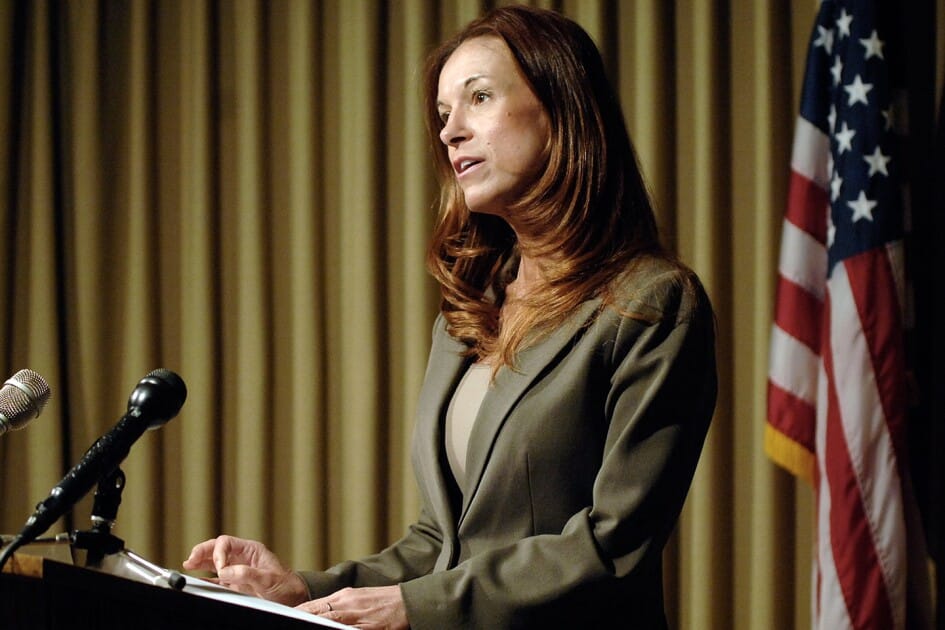
Baesler, the former long-serving state chief in North Dakota and a past president of the Council of Chief State School Officers, spoke with Education Week recently about how the Trump administration is balancing its push for ramping up state authority over K-12 with ESSA’s requirements.
This interview has been edited for clarity and brevity.
Secretary McMahon has made it clear the department is open for business on ESSA waivers. Do you have an overall philosophy on how you’re handling these?
There are two overarching goals that we want to accomplish, and that is returning education authority and flexibility to the states and having the greatest education system in the world, with the best student outcomes.
Those two goals are what’s driving us, and they aren’t binary. It’s actually because we will have assessment and accountability that we will be able to return education to the states and provide the states that authority and that flexibility.
And we’re very clear with states that their flexibility and authority comes with an increased responsibility to ensure that students are improving in their outcomes. To waive things just to waive things is not what we’re in business to do. We are waiving things so student academic achievement can be improved.
Some states are asking for assessment changes. For instance, Idaho wants to allow high schoolers to choose a test that aligns with their post-graduation goals. How are you balancing requests like that with a focus on transparency?
Baesler declined to address the specifics of any state’s waiver request but gave a general response.
We’re prohibited from waiving requirements that would harm transparency. It’s very clear that state assessments need to have a standard comparison.
To waive things just to waive things is not what we’re in business to do. We are waiving things so student academic achievement can be improved.
Kirsten Baesler, assistant secretary of elementary and secondary education, U.S. Department of Education
We’re here to improve academic outcomes. We’re not here to let states hide schools that aren’t performing. We’re here to elevate good practices and ensure that more students are becoming more proficient at all grade levels. We’re not here to hide subgroups or high schools. That’s not what we are going to do.
You’ve given one state, Iowa, the green light to combine funds for particular programs. The state originally asked for something more expansive. What should other states take away from that process?
It is not the wild, Wild West out there.
We are not allowed to waive how those funds are allocated. It’s just not allowable. We showed [Iowa] what parts of law we could waive, what parts we could not. I think we got to a really great place where they were able to save millions of dollars and then actually pass those on to their local school districts.
Critics have questioned whether the department has the capacity to consider and monitor these waivers, given that the agency’s staff was slashed in half and key programs are slated to move to other agencies. Can you respond to those concerns?
It has been such an honor to work with this office of elementary and secondary education staff.
No staff that has been overseeing the formula grants [such as Title I for disadvantaged students] was involved in the [reduction in force] program, and so they are all still there. And they are strong and they are experienced. These staff will be part of the detail that are going to Interior, to Labor, and to HHS. Our experts will continue to do the work, and I would imagine that they will continue to do the work in the same exemplary fashion that that they’ve been doing it.
The [waiver] decisions and policy authority remains with the Department of Education team. I think there’s a lot of confusion about that.
Everything that we do has to be in pursuit of creating a better system that will improve student academic outcomes. Waivers are good for four years. You have to be able to say, ‘This is how it’s going to improve student academic outcomes and this is how we’re going to measure [them],’ because [states] will need to come to us and prove that what they did [under a waiver] did improve academic outcomes.
What do you say to your former state chief colleagues who might be worried that this administration would approve a waiver only to have the flexibility taken away by a future administration?
We are here for another three years. I think that the important piece is who we have working on these waivers. It’s a mix of political and career [staff]. And it’s a partnership. I’m not going to go rogue and do anything that is not feasible, that they’re not behind, or they’re not going to be able to continue to deliver.
Regardless of the administration, those experts in assessment, in accountability, in transparency that have been doing this for years, they still remain. They are the connectors with the state chiefs. I would encourage chiefs that are reluctant to remember that even after the political administration changes, that the career staff are there and have been part of making these decisions.
So far, it seems to primarily be Republican-led states asking for waivers. Any thoughts as to why?
I suspect that as more details come out about subsequent waivers, [Democrat-led states], too, will want their students to be able to benefit from the flexibility. Greater flexibility, greater autonomy, but more responsibility. They will appreciate that. I don’t think it’s going to stay just all red states. That’s my prediction. I can’t guarantee that. I’m not a gambler, but I don’t think it’s going to stay just red states.
2026-03-12 20:11:05
Source link