
contributed by Beth Rush
When students say they want to work in health care, they often default to roles they already recognize, such as nursing or medicine.
Medical imaging is less visible, even though it offers defined training pathways, stable employment, and daily patient interaction. Making these roles explicit helps students evaluate options based on fit rather than familiarity.
What Medical Imaging Actually Involves
Medical imaging professionals produce diagnostic images that support clinical decision-making. Like most specialized industries, it often includes operating specialized equipment. Following strict safety protocols is obviously important, as is ensuring images meet clinical standards.
Skills That Predict Success in Imaging Programs
Students who do well in imaging programs tend to be comfortable with structured procedures and technical systems. They follow protocols carefully, communicate clearly with adults, and remain calm in clinical settings. Precision matters as much as empathy, since errors can affect patient safety.
Educators can use simple diagnostic tools to gather student interest and readiness before discussing specialized options like imaging careers.
What MRI Technologists Do
MRI technologists operate magnetic resonance imaging systems to produce detailed images of internal structures. Their responsibilities include patient screening, positioning, selecting scan parameters, monitoring image quality, and responding to safety concerns. Because MRI environments involve strong magnetic fields, adherence to protocol is central to the role.
Educational Pathways That Lead to Imaging Careers
Most imaging roles require completion of an accredited program and supervised clinical training. Programs vary in length, format, and specialization, but accreditation and access to clinical placements are critical factors. Students do not need prior college experience to begin, though requirements differ by program.
AIMS Education
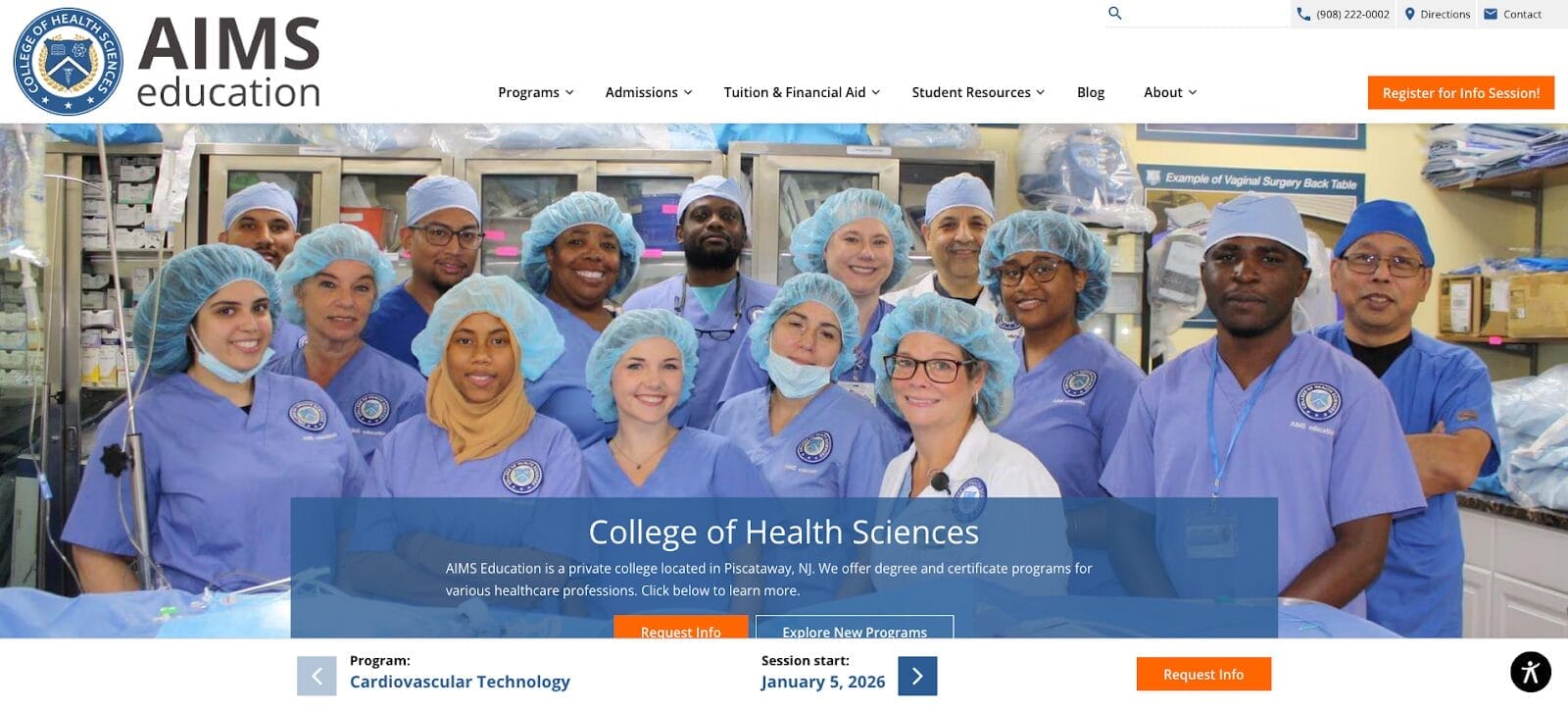
AIMS Education offers career-focused training pathways for students interested in medical imaging and related health care roles. Its programs emphasize technical instruction aligned with applied clinical preparation. AIMS Education is included here as one example of a pathway into medical imaging.
| Health Care Education Pathways | Key Features | Admission Requirements |
|---|---|---|
|
MRI Technology Patient Care Technician Medical Billing and Coding Medical Assistant And others |
Accredited by the Accrediting Bureau of Health Education Schools Hybrid programs available Online education pathways Lifetime career guidance and support And others |
Possess a high school diploma or equivalent Meet the minimum technology requirements Be 18 years or older Pass the entrance exam And others |
Keiser University
Keiser University provides a range of health care programs that include radiologic technology and diagnostic imaging-related fields. Its offerings reflect a traditional academic structure combined with hands-on instructional components. Programs like these are often considered by students seeking broader health care training options.
| Health Care Education Pathways | Key Features | Admission Requirements |
|---|---|---|
|
AS in Medical Assisting Diagnostic Medical Sonography Medical Laboratory Technician Radiologic Technology And others |
Online, day and evening classes available Small class sizes Hands-on learning opportunities Institutional and program-specific accreditations And others |
High school graduation or GED completion verification 910 SAT score 17 ACT score 50 ASVAB score And others |
Smith Chason College
Smith Chason College focuses primarily on medical imaging and nursing education. Its programs emphasize imaging-specific pathways such as sonography, MRI, and echocardiography. Institutions with this focus may appeal to students who want a more specialized training environment.
| Health Care Education Pathways | Key Features | Admission Requirements |
|---|---|---|
|
Bachelor of Science in Diagnostic Medical Sonography Academic Associate of Science in Magnetic Resonance Imaging Magnetic Resonance Imaging Qualification Certificate Bachelor of Science in Pediatric and Adult Echocardiography And others |
Over 25 years of providing health care education School of medical imaging and school of nursing available Accredited by The Accrediting Commission of Career Schools and Colleges Locations in the U.S. and Canada And others |
Be 17 years or older Schedule an appointment with an Admissions Representative Submit an Online Preparedness Questionnaire Pass the entrance exam And others |
What the Labor Data Shows
According to the U.S. Bureau of Labor Statistics, employment for radiologic and MRI technologists is projected to grow at about the average rate for all occupations over the next decade, driven in part by increased use of diagnostic imaging and an aging population.
Median annual pay for radiologic technologists exceeded the national median for all occupations in the most recent reporting period, with MRI technologists earning more on average. Workforce analyses from the American Society of Radiologic Technologists also point to ongoing staffing shortages in imaging departments, particularly in hospital and outpatient settings.
TeachThought Staff 2025-12-23 21:07:42
Source link