Close Menu
Education News Now

    Subscribe to Updates

    Get the latest creative news from FooBar about art, design and business.

    What's Hot

    Why K-12 Educators Are Alarmed About Proposed Student Loan Limits

    March 11, 2026

    Tennessee voucher program expansion advances in General Assembly

    March 10, 2026

    College students and professors are making their own AI rules : NPR

    March 10, 2026
    Facebook X (Twitter) Instagram
    Facebook X (Twitter) Instagram Pinterest VKontakte
    Education News Now
    Facebook X (Twitter) Instagram
    Education News Now
    Home»Education»Creating A New Digital Architecture Of Participation –
    Education

    Creating A New Digital Architecture Of Participation –

    By Terrell HeickAugust 3, 2024No Comments2 Mins Read
    Facebook Twitter Pinterest LinkedIn Tumblr Email
    Share
    Facebook Twitter LinkedIn Pinterest Email


    by Terrell Heick

    It isn’t clear what the original goal of social media was.

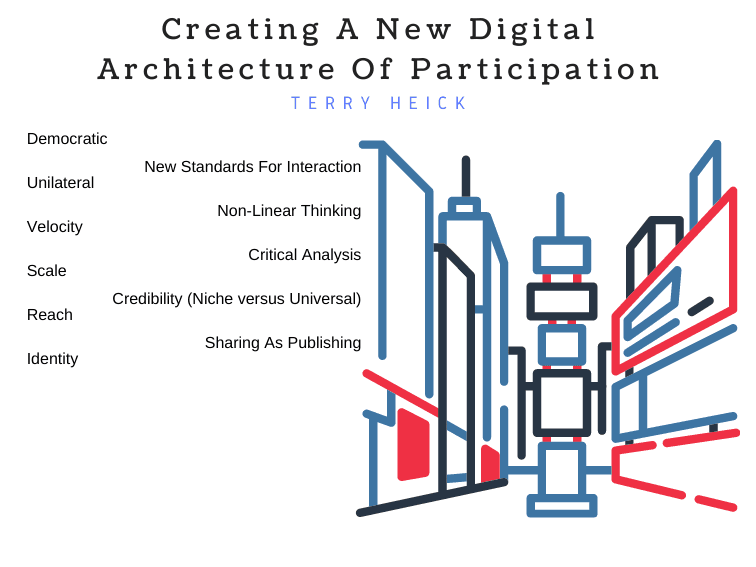
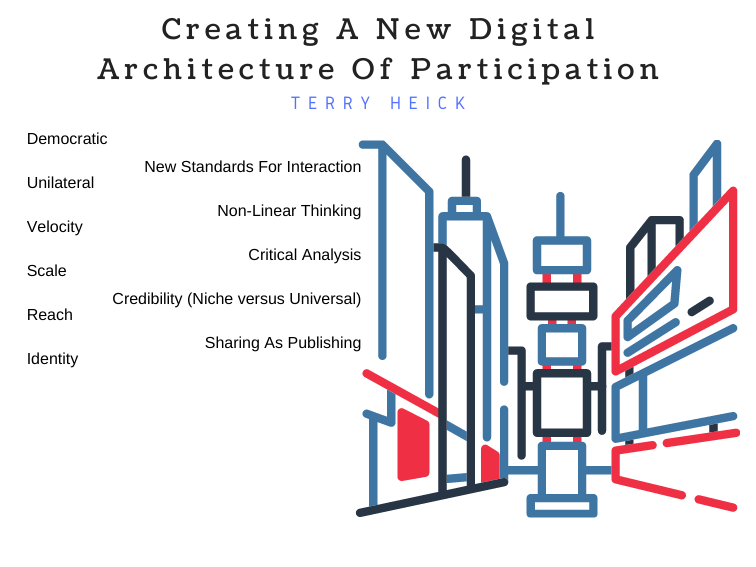
    No single person, organization, or platform could have possibly decided this. Once the framework of publishing content–in any constantly changing but not always evolving forms–was established, new standards for engagement emerged.

    At its best, the primary goals of most kinds of print publishing in the past were sharing ideas (new, unique, credible, propaganda, etc.) and creating revenue.

    Social media has made anything simple to publish, which has changed things. For example, ‘social engagement’ and ‘traction’ have become their currency.

    There are new scales for knowledge-sharing–one billion vs. 10,000 potential readers, for example) and criteria for the credibility of these ideas.

    There are new ‘cognitive needs’—critical analysis becomes more important than ever, considering the sheer volume and ‘velocity’ of ideas.

    I wrote most of this 10 or 12 years ago and never published it and now a lot of it is outdated but I’ll share it anyway,

    The big idea here revolves around how different digital publishing is from physical printing.

    Critical Analysis

    Credibility

    Bias

    Integration

    Emotion As Currency

    Velocity

    Scale

    Reach

    Identity

    New Standards For Interaction & Engagement

    Non-Linear Thinking

    Terrell Heick 2024-08-03 01:34:54

    Source link

    Share. Facebook Twitter Pinterest LinkedIn Tumblr Email
    Terrell Heick

      Related Posts

      Why K-12 Educators Are Alarmed About Proposed Student Loan Limits

      March 11, 2026

      Tennessee voucher program expansion advances in General Assembly

      March 10, 2026

      College students and professors are making their own AI rules : NPR

      March 10, 2026

      School Mental Health Projects Get 3-Month Reprieve as Court Rules Against Trump

      March 10, 2026
      Add A Comment

      Comments are closed.

      New Comments
        Editors Picks
        Top Reviews
        Advertisement
        Demo
        • Contact us
        • Do Not Sell My Info
        • Term And Condition
        Copyright © 2026 Public Education News

        Type above and press Enter to search. Press Esc to cancel.