
The U.S. Supreme Court this week will consider the legality of one of the biggest items on President Donald Trump’s immigration-enforcement agenda—an executive order that seeks to end birthright citizenship for children born on U.S. soil of immigrant parents who are undocumented or have lawful temporary status.
The case, Trump v. Barbara, is being watched by educators because enforcement of the order would vastly expand the population of undocumented children, which could discourage their enrollment in public schools—even though a 1982 Supreme Court decision bars states from denying students a free public education based on immigration status.
That decision, Plyler v. Doe, is under attack from many of the same forces that back the birthright citizenship order. And while any reconsideration of Plyler is not before the justices in the birthright case, it lurks just beneath the surface.
“Plyler itself is under attack, and people are trying to strip away access to education, access to health care, and the ability of undocumented people in this country to live their lives,” said Cody Wofsy, the deputy director of the American Civil Liberties Union’s immigrant rights project, which represents the challengers of the executive order. “It would be cold comfort to the families of these thousands and thousands of babies to tell them there is still some way for their children to access schools.”
Sharp debate over a 14th Amendment right
The Barbara case involves Trump’s Jan. 20, 2025, order declaring that a person born in the United States is not automatically a citizen by birth under two circumstances: When the child’s mother is unlawfully present in the United States or when the mother’s presence here at the time of birth is lawful but temporary, such as on a student, tourist, or work visa. Under the order, both circumstances also require that the father not be a U.S. citizen or lawful permanent resident at the time of the child’s birth.
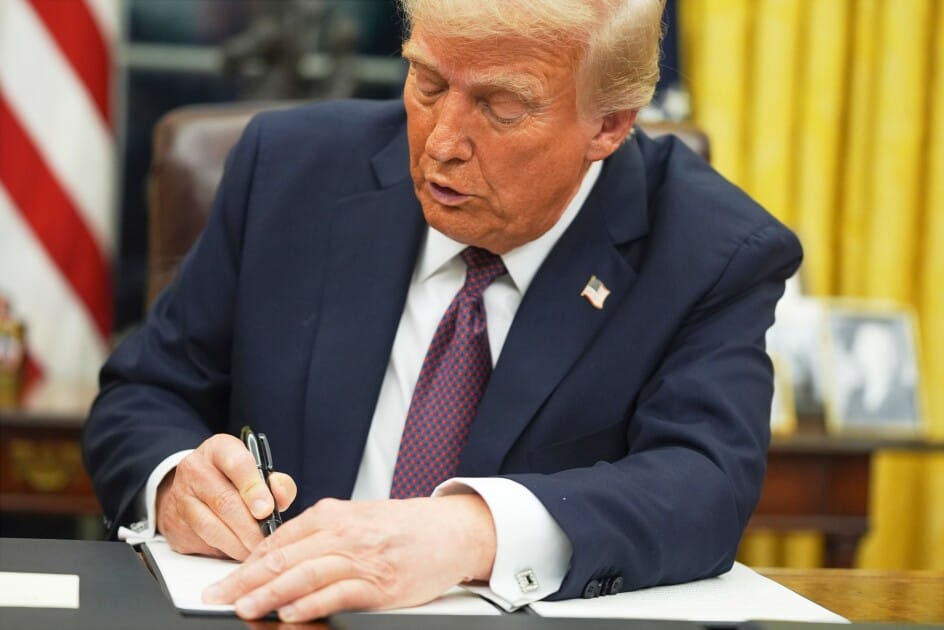
“Birthright—that’s a big one,” Trump said as he signed the order on the first day of his second term. “We think we have very good grounds.”
The 14th Amendment, enacted after the Civil War, guarantees citizenship to “all persons born” in the United States who are “subject to the jurisdiction thereof” at birth. The longtime understanding of the citizenship clause is that the only recognized exceptions to birthright citizenship still relevant today would be for the U.S.-born children of diplomats and members of invading armies.
The key battleground in the case is over the meaning of “subject to the jurisdiction” and whether children of undocumented or temporary immigrants are lawfully “domiciled,” meaning having permanent residence, in the United States.
The citizenship clause “was adopted to grant citizenship to freed slaves and their children—not to children of temporarily present aliens or illegal aliens,” U.S. Solicitor General D. John Sauer told the justices in a brief. Only those who owe “direct and immediate allegiance” to the nation qualify for birthright citizenship, and the defined groups do not, he added.
The text of the order makes it prospective, applying only to those born after the effective date, and it has not yet been enforced because of court challenges. But it would be hard to overstate the impact on immigrant families if the Supreme Court upholds the order.
The Migration Policy Institute estimates that about 255,000 children are born in the United States each year to undocumented or temporary visiting parents as defined in the executive order. The nation’s “unauthorized” population would increase by some 2.7 million over the next 20 years as a result of the order, MPI says.
Another think tank, the Center for Immigration Studies, estimates that there are some 4 million children of undocumented immigrant parents enrolled in U.S. schools, about one-fourth of whom are immigrants themselves and three-fourths of whom were born in the United States and thus currently have birthright citizenship.
The challengers fear that a decision upholding the order could eventually be applied to the latter group of children (as well as to adults meeting the same definition).
“The government’s theories and arguments about what it thinks the Constitution has always meant would cast doubt on the citizenship of literally hundreds of thousands of our fellow Americans,” the ACLU’s Wofsy said. “It would be a cataclysmic change in what it means to be an American.”
Weighing high court precedent
An initial round of litigation last year led to the U.S. Supreme Court’s decision in Trump v. CASA Inc., with the justices ruling 6-3 that lower federal courts lacked authority to issue the kind of nationwide injunctions that had been issued blocking the order. The majority did not address the merits of birthright citizenship, but it did leave room for class actions to challenge the order.
The ACLU and others quickly filed new, class action lawsuits. Every lower court to rule in multiple challenges to the executive order has ruled against the Trump administration.
In a decision last July, U.S. District Judge Joseph N. LaPlante of New Hampshire, a President George W. Bush appointee, ruled that the executive order was inconsistent with the Supreme Court’s 1898 decision in United States v. Wong Kim Ark.
That ruling, which affirmed the U.S. citizenship of the American-born son of Chinese nationals, held that the 14th Amendment’s citizenship clause enshrined a common-law understanding of birthright citizenship that, under English law, almost all children born in the sovereign’s territory to foreign nationals were subjects of the crown.
LaPlante said Trump’s order would cause “irreparable harm” to the nationwide class of affected children born after the executive order’s effective date. (The original date was Feb. 20, 2025, though if the court upholds the order, there will probably be a new effective date.)
The New Hampshire case is the one now being reviewed by the justices.
An anonymous parent of a child born last year, one of three class representatives in the litigation, said in a statement released by the ACLU that they feared for the future of their daughter.
“Like any parent, my main concern was about the opportunities that she might get, and the education that she will have,” the parent said. “As this political debate is going on, she’s going to keep questioning whether she’s American or not, and that is going to impact her personal growth.”
A role for Plyler decision on free public schools regardless of immigration status
Lurking throughout the case is the high court’s 1982 Plyler decision, which has kept states and school districts from charging undocumented students tuition and generally discouraged them from inquiring about students’ immigration status.
“State and local governments bear more of the fiscal burden of immigration than the federal government bears,” says a friend-of-the-court brief filed in support of the Trump administration by 25 Republican-led states. Citing Plyler, the brief adds, “States spend tens of billions of dollars annually on the public education of aliens within their borders.”
At least three states are currently considering legislation that would limit undocumented students’ access to a free public education, and four other states have considered but failed to pass such measures in recent years. The effort is viewed as having a goal of getting a case back before the Supreme Court so it could reconsider Plyler.
The administration doesn’t mention Plyler in its briefs in the birthright citizenship case, but earlier this month, presidential adviser Stephen Miller reportedly met with Texas state legislators in the White House and pushed the idea of ending public funding for the education of undocumented students. The conservative Heritage Foundation has issued a call to states along the same lines, to pass laws that would trigger challenges that could result in the high court reconsidering Plyler.
A friend-of-the-court brief joined by the American Federation of Teachers, the National Education Association, and 18 other labor unions emphasizes an argument made by Justice William J. Brennan Jr. in his majority opinion in Plyler, that the denial of benefits such as education would create a “permanent caste of undocumented resident aliens.”
“The elimination of birthright citizenship would transform promising future generations into a permanent underclass,” says the labor brief.
“When children are given citizenship when they’re born in this country, they go on to be productive citizens who elevate society in all different ways,” Alice O’Brien, the general counsel of NEA, said in an interview.
“The same groups and advocates who have been pushing for the executive order are now pushing for things like schools keeping records on immigration status and barring children from school based on immigration status,” O’Brien said. “So if the court were to go down this road, it would certainly fuel that state legislative debate over those issues.”
A Brennan footnote in Plyler attracts fresh attention
The Plyler decision is playing another role in the birthright case. While many legal filings discuss the 1898 Wong Kim Ark decision and debate whether that settled the birthright citizenship question, some point to a footnote in Brennan’s Plyler opinion that they view as being a much more recent endorsement by the Supreme Court of the broader definition.
Brennan, in that footnote, endorsed a legal commentator’s view that “no plausible distinction with respect to 14th Amendment ‘jurisdiction’ can be drawn between resident aliens whose entry into the United States was lawful, and resident aliens whose entry was unlawful.”
Even the dissenters in the 5-4 Plyler decision accepted the view that undocumented immigrants fell under the jurisdiction of the United States.
That led James C. Ho, a prominent legal conservative, to conclude a decade ago that “birthright is protected no less for children of undocumented persons than for descendants of Mayflower passengers.”
“Although the court splintered over the specific question of public education” in Plyler, Ho wrote in a 2006 law review article, “all nine justices agreed that the Equal Protection Clause protects legal and illegal aliens alike.”
(Trump appointed Ho to a federal appeals court in 2017, and the judge is often described as being interested in any Supreme Court opening that might arise under Trump. In recent years, he has modified his views on immigration by suggesting that recent mass unlawful immigration was akin to an “invading army,” and that could lead to denying citizenship to the U.S.-born children of such “invaders.”)
Gage Raley, a former law professor at a South Korean campus of Kean University in New Jersey, wrote a 2022 law review article that highlighted Ho’s view of the way Plyler bolstered the Wong Kim Ark decision. But Raley, who supports Trump’s executive order, suggested the court “could distinguish (or even discard)” those two decisions in order to uphold the order.
In an interview, Raley noted that Wong Kim Ark was decided based on the 14th Amendment’s citizenship clause, while Plyler was based on the equal protection clause. The two clauses deal differently with the issue of “jurisdiction,” he noted.
“The court doesn’t necessarily have to overturn Plyler to uphold the executive order,” Raley said. “The court will probably save the Plyler issue for a future case.”
Meanwhile, in her dissent to the court’s CASA ruling last year, Justice Sonia Sotomayor gave a preview of her views of birthright citizenship, leaving little doubt that she believed the Trump executive order is unconstitutional.
In the dissenting opinion joined by Justices Elena Kagan and Ketanji Brown Jackson, Sotomayor cited both the language of Wong Kim Ark and Brennan’s relevant footnote in Plyler as supporting the conclusion that “subject to the jurisdiction” in the citizenship clause applies to all “resident aliens,” whether their entry in the United States was lawful or not.
“Few constitutional questions can be answered by resort to the text of the Constitution alone, but this is one,” she wrote. “The 14th Amendment guarantees birthright citizenship.”
2026-03-30 18:50:45
Source link