
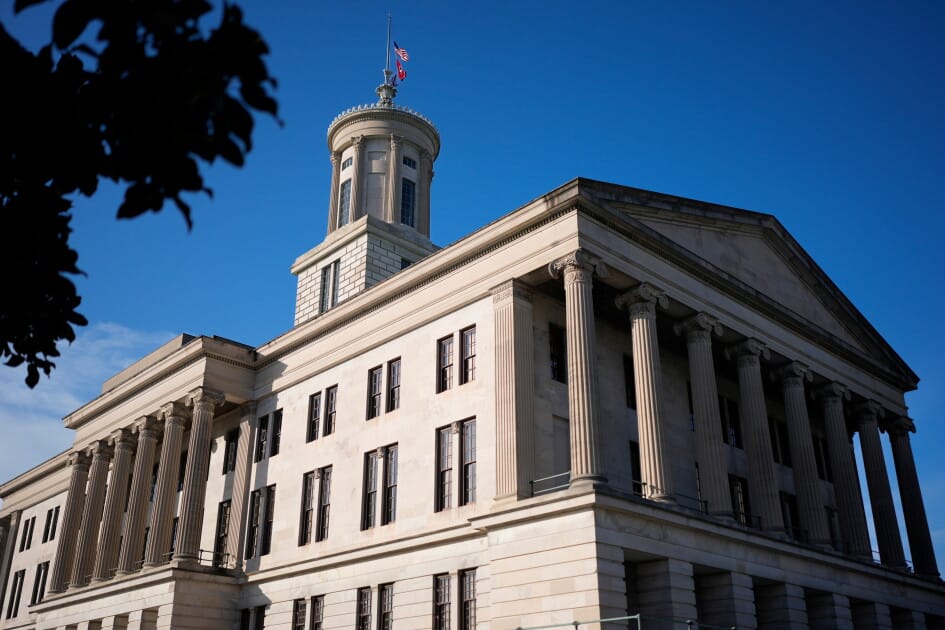
For the second consecutive year, Tennessee legislators failed in their efforts to limit undocumented students’ access to free, public education during the legislative session.
Since President Donald Trump’s reelection win, at least seven states, including Tennessee, have taken action to challenge that right, granted by the 1982 U.S. Supreme Court ruling in Plyler v Doe. Five of those efforts have failed, according to an Education Week analysis.
In Tennessee, House Bill 793—initially introduced along with companion Senate Bill 836 in 2025—would have required schools to collect students’ immigration status and charge tuition or even deny enrollment to those who were undocumented. While the House passed an amended version that cut out the tuition and enrollment language, the Senate did not pass a version aligning with those edits following party disagreement over the changes.
This year, state leaders also introduced HB 1711 and its companion SB 2108, which would have required the collection of student immigration information. These bills did not make it out of committee.
“A successful challenge would not just affect Tennessee but threaten the right to education for children across the country,” said leaders of EdTrust Tennessee, a research and advocacy organization, in a press release.
While immigrant student advocates and educators are celebrating what they describe as a major victory for all students, they say they remain vigilant for any future challenges in Tennessee and other states.
What happened in Tennessee
Since 2025, Tennessee lawmakers have faced sustained and vocal opposition from grassroots coalitions of advocacy groups and educators, including Ally Dorsey, a teacher in Chattanooga. Many of these advocates call their work a victory.
“We feel really relieved that our voices worked and that everyone in our state rose up and said no to tracking our students,” Dorsey said.
This year, the Hamilton County Schools Principals Association even met with a delegation of state lawmakers to expressly ask them not to vote on any school-related immigration legislation, said Jill Levine, the vice president of the organization and principal of Chattanooga High Center for Creative Arts.
“Oftentimes, educators are afraid to speak out, or principals are afraid to speak out,” Levine said. “But when we know that there are things proposed that are really going to be harmful to students, we have to stand up for them.”
Experts have previously warned that even requiring schools to collect immigration-status information from families could deter enrollment, effectively undermining undocumented students’ right to free, public education by generating fear about how the information might be used.
Though some conservative leaders, including Lora Ries, the director of the Heritage Foundation’s Border Security and Immigration Center, argue that collecting immigration-status information in the aggregate does not count as a challenge to the Plyler decision.
“Collecting the data is step one, because then at least people have a sense of real numbers and then can calculate real costs and make policy decisions based on that,” Ries said.
What comes next regarding student rights
Since 2024, the Heritage Foundation has publicly encouraged state lawmakers to pass legislation that both collects student immigration information and charges tuition to those who are undocumented.
Ries said states should keep trying in their efforts to challenge the Plyler decision and sees Texas as a likely state to monitor.
“We shouldn’t be living in a world where taxpayers are wondering how much of our money is going to this issue,” Ries said.
Tennessee lawmakers did not respond to multiple requests for comment on whether they expect to reintroduce legislation challenging Plyler in future sessions.
Educators and advocates in Tennessee said they remain vigilant. Levine, with the Hamilton County Schools Principals Association, said she hopes the organization can meet with a delegation of legislators later this year to discuss any bills on the horizon that would affect schools.
2026-05-22 20:03:11
Source link