
More than 10 separate ongoing projects to strengthen instruction and school-based social services in low-income communities will come to a halt after the federal government late last week abruptly canceled tens of millions of dollars in grants just two weeks before their next round of funding was set to arrive.
The U.S. Department of Education website lists more than 70 recipients of active five-year grants through its Full-Service Community Schools program, which helps school districts, colleges and universities, and nonprofit organizations provide food and housing assistance, medical care, and other services in school buildings.
Last Friday, according to three education program advocates with knowledge of the situation, 12 to 20 of those recipients received letters from a top agency official alerting them that, effective immediately, their projects won’t get any more federal money.
At least one recipient of a Promise Neighborhoods grant from the Education Department—which also focuses on bolstering academic and social supports for children in high-need neighborhoods—received a similar “notice of non-continuation” on Friday as well, the advocates said.
The 70 current Community Schools grantees were collectively expecting more than roughly $380 million in promised federal awards between now and 2028. All the discontinued grants had either two or three years of annual funding remaining in their five-year projects.
Education Week reviewed one letter dated Dec. 12 announcing the non-continuation of a Community Schools grant. The stated reason for the cuts will look familiar to more than 200 other federal education grant recipients across close to 20 other programs that have received nearly identical letters in recent months as the Trump administration screens grants and pulls the plug on anything it claims is related to advancing diversity, equity, and inclusion.
Due to either a violation of federal civil rights law or a conflict with the current president’s policy agenda, “the grant is therefore inconsistent with, and no longer effectuates, the best interest of the Federal Government and will not be continued,” writes Murray Bessette, the Trump-appointed acting head of the Education Department’s office of planning, evaluation, and policy development.
Grantees have a week at most to send an appeal request to Kirsten Baesler, the department’s newly confirmed assistant secretary overseeing K-12 education programs.
The department hasn’t publicly announced how many or which grants it’s discontinued. It wasn’t immediately clear whether all the remaining Community Schools and Promise Neighborhoods grant recipients have received confirmation that their ongoing awards will remain intact.
The Education Department didn’t answer directly on Monday when asked whether the agency has cut Community Schools grants. Madi Biedermann, the agency’s deputy assistant secretary for communications, wrote in an email that the Trump administration is generally repurposing non-continued grants into “high quality programs that better serve special needs students.”
“The Trump administration is no longer allowing taxpayer dollars to go out the door on autopilot—we are evaluating every federal grant to ensure they are in line with the administration’s policy of prioritizing merit, fairness, and excellence in education,” Biedermann’s statement read.
Community schools investments are at issue in the Trump era
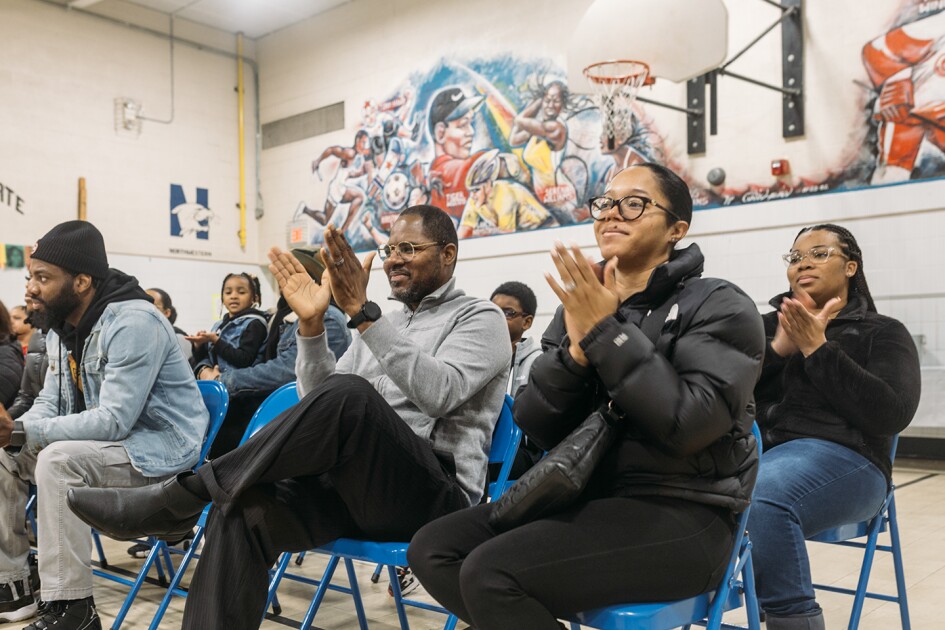
Community schools are public schools that partner with neighborhood organizations and government agencies to offer a wide range of services and supports for students and their families—including extended learning time, health care, tutoring programs, meals, internship opportunities, immigration assistance, and more.
The federal government has been investing in the community schools model since the late 1970s. More recently, as some states began embedding community schools investments in their education funding formulas, the Biden administration pushed for substantially greater federal investment in the Full-Service Community Schools grant program. Congress ultimately boosted annual funding for the program from $25 million to $150 million starting in 2023.
Promise Neighborhoods, meanwhile, grew out of a 2008 campaign promise from President Barack Obama to invest in services for children in communities with high crime rates and low academic achievement. It’s modeled on the Harlem Children’s Zone in New York City.
The Trump administration earlier this year proposed axing both programs altogether in its 2026 budget. In October, the department laid off all but one employee in the office that manages these grants. Congress passed a law in November rescinding those layoffs, but employment for those workers is only assured through Jan. 30.
Both programs are now also part of the Trump administration’s broader plan to move Education Department programs to the Department of Labor. The move, announced last month, has already drawn a court challenge from 20 state attorneys general.
Meanwhile, federal lawmakers are at odds over the future of both programs. Senate appropriators want to maintain them, with full funding for Promise Neighborhoods and a $15 million cut to annual funding for Community Schools. House appropriators have approved a fiscal 2026 budget that instead grants Trump’s wish of zeroing out both programs.
“Some of the services provided by community schools are duplicative of other free and subsidized government programs that serve the same population,” says the House appropriations committee report on the chamber’s budget bill, which lawmakers advanced in September.
Education Department officials have said program staff managing existing grants will transition to their programs’ new home agencies, though they haven’t confirmed that all current staff will make that move.
The noncontinuation letters for Community Schools and Promise Neighborhoods also don’t specify whether the Education Department will award the clawed-back funds to future applicants to the same grant program or to beneficiaries of other funding streams.
Latest affected grants add to wide range of recent Education Department cuts
The Education Department made similar moves earlier this year to cancel hundreds of individual grant awards from roughly 20 separate congressionally mandated funding programs—including for training special education teachers, preparing middle and high schoolers for college, improving instruction for English learners, reversing racial and economic school segregation, and helping parents of children with disabilities understand their rights.
The grant cuts announced late last week appear to be the department’s first since the federal government shutdown ended a month ago.
A small number of Education Department grant recipients have had success getting their curtailed funding restored. The New York City school system last month reached a settlement agreement with the Education Department to unlock $12 million in Magnet Schools funds the Trump administration had withheld over the city’s policies allowing students to use restrooms that align with their gender identity. The department has also approved a handful of grant recipients’ appeal requests.
But the vast majority of individual grant cancellations have not been reversed. Most recipients who have appealed received a rejection letter in response signed by Lindsey Burke, a top Trump-appointed official at the Education Department who was a lead author on the education section of the conservative policy document Project 2025.
2025-12-15 22:17:30
Source link