
A federal judge has blocked the Trump administration from implementing new requirements for the Teen Pregnancy Prevention Program grantees to focus on abstinence-only curricula—but did not reverse earlier decisions to cancel funding in that area.
The U.S. Department of Health and Human Services in June abruptly canceled funding for more than 50 separate programs that teach children and teenagers how to prevent pregnancy and sexually transmitted infections.
At the same time, HHS revamped the grant with new requirements that align with conservative priorities like emphasizing abstinence and fertility.
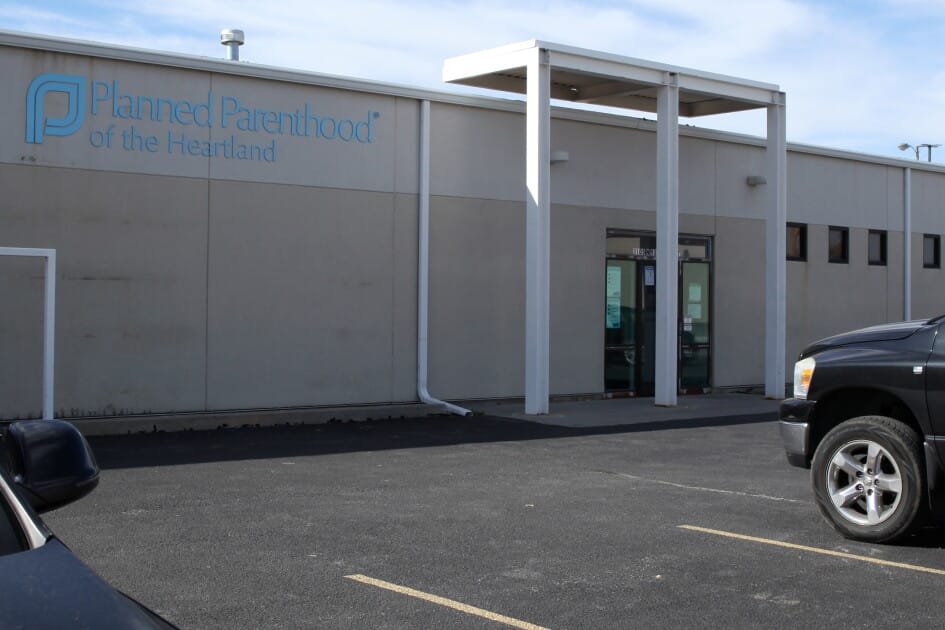
A coalition of affected grantees—Planned Parenthood of the Heartland; the Sexuality Information and Education Council of the United States); Hennepin County, Minn.; and King County, Wash.—filed a federal lawsuit on July 14 challenging the legality of the cuts and the new requirements.
Judge Christopher Cooper, an Obama appointee in the U.S. District Court in Washington, sided in part with the grantees.
The Trump administration “is perfectly entitled to formulate its own views about how to stem teen pregnancy—or even whether it is worth preventing at all—and to pursue policy initiatives consistent with its viewpoint,” Cooper wrote in a 61-page opinion. “But it is not at liberty, under the Administrative Procedure Act (‘APA’), to impose conditions on grant recipients that Congress did not intend or that are unreasonable or unexplained.”
HHS did not immediately respond to a request for comment on the ruling. Lawyers for the agency argued in court that the lawsuit was invalid, calling it “a premature attack on a series of award decision that the Department has not yet made.” They argued that the grant cancellations “produced at most transient economic harms to Plaintiffs and indirect harms to third parties,” and that the organizations that sued didn’t have standing to challenge the agency’s new conditions for awarding grants.
The new iteration of the Teen Pregnancy Prevention Program required prospective grantees to pass an “alignment review” ensuring that their proposal doesn’t include diversity, equity, and inclusion efforts or support gender-affirming care.
Programs that stress marriage before procreation were to receive priority consideration, as would applicants that haven’t received federal funds before.
Sexual and reproductive health education experts raised concerns about the changes to the Teen Pregnancy Prevention Program, saying that focusing on abstinence only is not proven to change behavior among young people.
The lawsuit accused the administration of unlawfully forcing grantees to “use non-evidence-based curricula that exclusively promote abstinence-only before marriage” and “ideologically-driven, medically inaccurate information, including misinformation regarding contraception.”
The court ruling will stop HHS from using those new criteria to dole out grants while the group’s lawsuit moves through the courts. Cooper, however, declined to reinstate existing grants because that issue likely has to be decided by the Court of Federal Claims instead, Cooper wrote.
The judge directed both the administration and the challengers to propose a schedule for next steps in the litigation by Sept. 1.
While sexual and reproductive health education experts applauded the court’s decision to block the changes to the Teen Pregnancy Prevention Program, they continue to advocate for the restoration of the canceled grants.
“We are encouraged by the court’s recognition that the Teen Pregnancy Prevention Program must remain grounded in evidence and medically accurate information,” said Rhonda Braxton, the vice president of health and wellness for Children’s Aid, one of the affected grantees.
“This ruling is an important step, but it does not restore the abruptly terminated grants earlier or address the immediate impact on young people and communities.”
Children’s Aid had been a recipient of the health and human services agency’s Teen Pregnancy Prevention Program grant since 2015. In 2023, the New York City organization received a grant renewal for $936,700 a year through 2028.
With the funding, Children’s Aid educators visited classrooms, hosted workshops on sexual and reproductive health, and trained school educators on the organization’s sexual and reproductive health education curriculum. It also helped teens build healthy relationships and strengthen their communication and decisionmaking skills by hiring some for paid positions as peer educators.
“Young people deserve access to proven, age-appropriate programs that enable them to make informed decisions about their health and their futures,” Braxton said. “We remain committed to protecting that access and advocating for the continuation of effective, evidence-based programming.”
2026-08-24 20:14:27
Source link