
Sign up for Chalkbeat Philadelphia’s free newsletter to keep up with the city’s public school system
As Philadelphia moves to close 17 district schools, some Board of Education members say it’s time to put additional scrutiny on charter schools as well.
During a Thursday meeting, Joyce Wilkerson called on the board to analyze the 16 charter schools that operate as part of the city’s Renaissance Initiative. The program turned district schools over to charter operators in an effort to improve them, but largely has not succeeded.
“The time has come for us to get a handle on what’s going on,” Wilkerson said. “We’ve just finished closing district neighborhood schools. I think that we ought to do a similar kind of analysis as we approach the future of the Renaissance charter school program.”
When district leaders launched the Renaissance Initiative in 2010, the schools were meant to operate like neighborhood schools, serving “the students in the surrounding neighborhood or catchment area,” according to district policy. At the time, the district was run by a state-appointed board that favored charter expansion. But as student enrollment shrinks citywide, many Renaissance schools rely on filling their seats with students from outside their neighborhood. That means enrolling kids who might otherwise attend their own neighborhood district-run school, increasing competition for students.
In fact, at half the city’s Renaissance schools, the majority of students came from outside the schools’ catchment, a Chalkbeat analysis of district data for last school year found. The schools must give priority access to students within their catchments, but can open up remaining seats to students anywhere in the city, just like at district neighborhood schools.
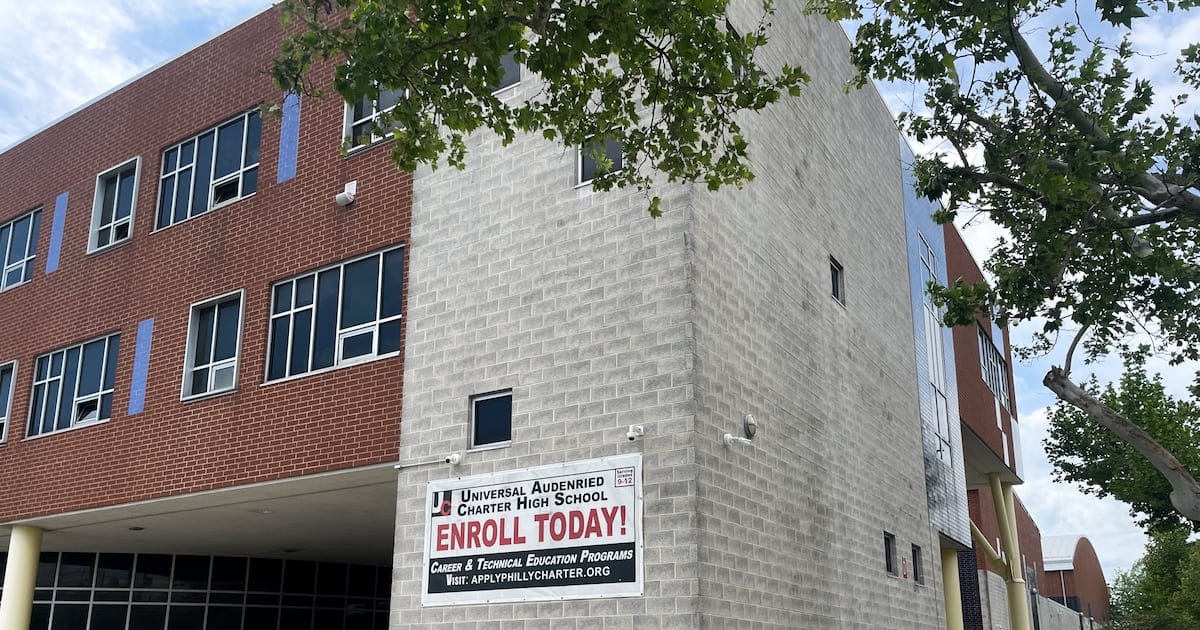
Out-of-catchment enrollment is highest at Universal Audenried Charter High School, whose charter the board voted to renew Thursday. Only 20% of students reside in the school’s catchment neighborhood.
“That’s not the reason this school was created,” said Wilkerson. “It’s not the parameters within which it’s supposed to operate.”
Board President Reginald Streater commended Universal Audenried for its improved academic scores in recent years. But he agreed with Wilkerson “that the Renaissance question is a question that the board needs to wrestle with,” adding that members must look into whether the initiative is accomplishing what it set out to do.
Penny Nixon, CEO of Universal Charter Schools, which operates Universal Audenried, said in a statement that the board’s discussion “presents an opportunity for meaningful dialogue about how we, together, can continue strengthening neighborhood enrollment.”
“While we cannot determine where families choose to enroll their children, we remain steadfast in ensuring that neighborhood families have access to our school and that every available seat is used to serve Philadelphia students when neighborhood demand does not fill our capacity,” Nixon said.
The board has tried to limit out-of-catchment enrollment at Renaissance charters by including conditions in their charter agreements that require the schools to enroll mostly students from within their catchments. But schools that don’t meet requirements continue to operate.
Universal Audendried’s previous charter agreement required the school to limit new students for the 2025-26 school year to those coming from its catchment area, or those who were siblings of current students. Though the school failed to meet that condition, the board still renewed it Thursday.
Renaissance charters are largely subject to the same accountability standards as other charters, which focus on schools’ academic and operational performance. The board can move not to renew a Renaissance charter if it does not meet some of those standards, which kicks off a process that can lead to closure. But it cannot close one of those schools unilaterally.
District’s school closure plan left out charter schools
Philadelphia’s district enrollment has shrunk by 13% from a decade ago, largely due to declining birth rates. Fewer kids means district, charter, and private schools are all competing for fewer students.
The district’s sweeping facilities plan, including closing 17 schools beginning next year, is largely meant to help the district adapt to its enrollment decline.
The board voted to approve that plan earlier this year, after months of protest from school communities. But though one-third of Philadelphia students attend charter schools, and the district owns the facilities of Renaissance charters, the district didn’t include an analysis of charter school enrollment or potential plans for Renaissance buildings in its facilities planning process.
District and board officials did not respond to questions about why charter schools were not included.
The district’s website states that “While the District and renaissance charter schools are an interconnected system, the primary recommendations in this plan will focus on District-operated school programs.”
Montessori Charter fights school board over nonrenewal decision
Separately on Thursday, the school board kicked off the process that could lead to closing Philadelphia Montessori Charter School, which is not a Renaissance charter.
The school, which enrolled around 250 students last year, had fewer than 20% of its students score proficient in the state math and reading test last year, both below the district average.
The “student academic growth has not kept pace with state expectations,” said Board of Education Vice President Sarah-Ashley Andrews Thursday. Seven of the nine board members voted in favor of issuing a notice of nonrenewal to the school.
The school appears ready to fight the decision. It filed a lawsuit in May in the Philadelphia Common Pleas Court against the district alleging its charter renewal process is unlawful. On Tuesday, the school’s president and two families filed a separate lawsuit against the district in federal court, alleging the district “administered the renewal process in a discriminatory and arbitrary manner” against the school.
Before the vote, Philadelphia Montessori Executive Director Amanda Wilson urged the board to pause their decision as the court cases play out.
“When decisions affect the future of a public school and hundreds of children, the process should inspire confidence that these decisions are being made thoughtfully,” said Wilson.
Philadelphia Montessori is one of several charter schools and charter advocacy groups fighting the district in court over its renewal process.
Rebecca Redelmeier is a reporter at Chalkbeat Philadelphia. She writes about public schools, early childhood education, and issues that affect students, families, and educators across Philadelphia. Contact Rebecca at rredelmeier@chalkbeat.org.
Rebecca Redelmeier 2026-07-24 18:54:56
Source link